Towards a longer pedestrian zone: Wolfsburg’s Nordkopf is becoming (slightly) car-free
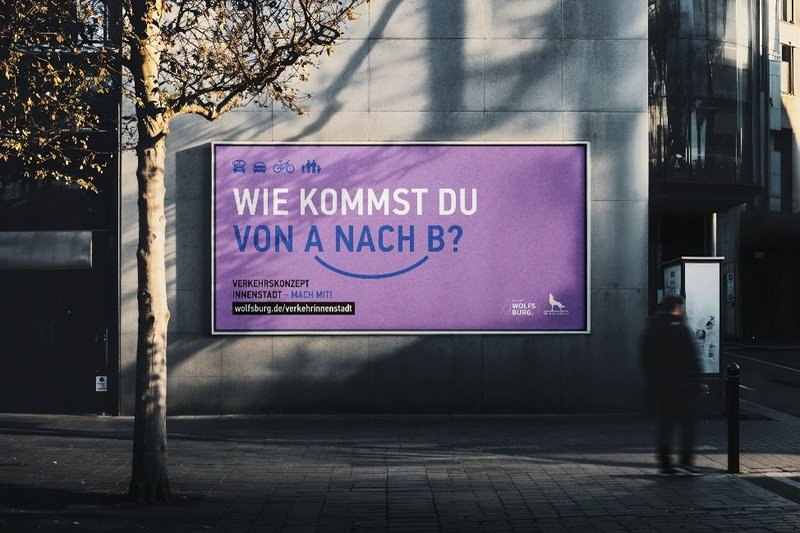
Wolfsburg is a car city. This has developed historically and is deeply embedded in the city’s structure. But what happens when a transport plan is consistently devised from the perspective of all road users – including pedestrians, cyclists and users of local public transport (ÖPNV)?
This is precisely what PB Consult has been working on in collaboration with the City of Wolfsburg over the past few months. The result: a city centre transport plan, which was adopted by the City Council on 22 June 2026 and forms the basis for the further development of Wolfsburg’s city centre.
What the concept demonstrates
The situation is clear: Wolfsburg’s road network functions relatively well for motor vehicle traffic outside peak hours. Junctions and interchanges, on the other hand, reach their capacity limits when traffic volumes are high, resulting in cascading traffic jams.
The picture is different for cyclists: cycle paths end abruptly before junctions, switch sides of the road without warning or simply peter out. This leads to constant interruptions and a high level of uncertainty. For pedestrians, there is a lack of direct, attractive routes. The quality of footpaths and the quality of the public environment suffer particularly in areas where the street space is primarily designed for moving and stationary motor vehicle traffic.
Parked traffic is also a key issue: many motorists prefer free on-street parking to multi-storey car parks, even though the latter are often under-utilised. An online survey showed that around three-quarters of respondents who usually park elsewhere deliberately avoid paying parking charges. The concept therefore recommends making parking spaces in multi-storey car parks significantly cheaper than on-street parking.
What was decided
The City Council has adopted the transport strategy as a guiding framework for future urban development.
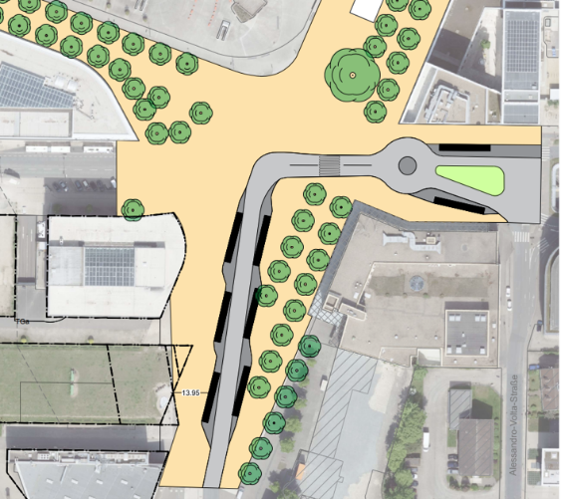
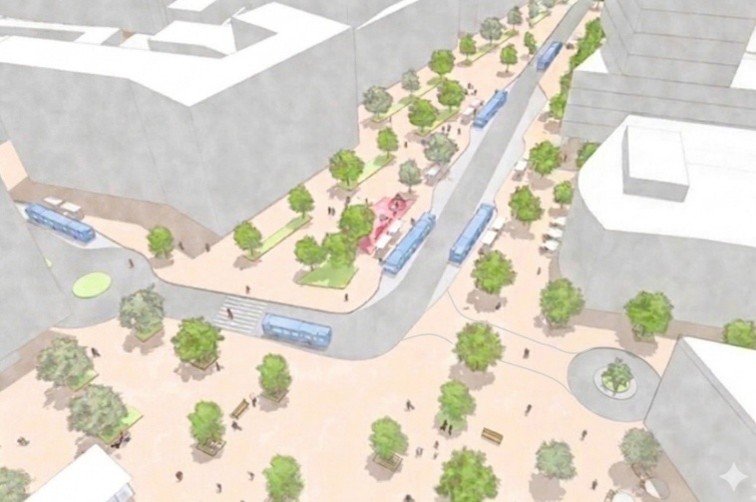
Specific measures include, amongst other things:
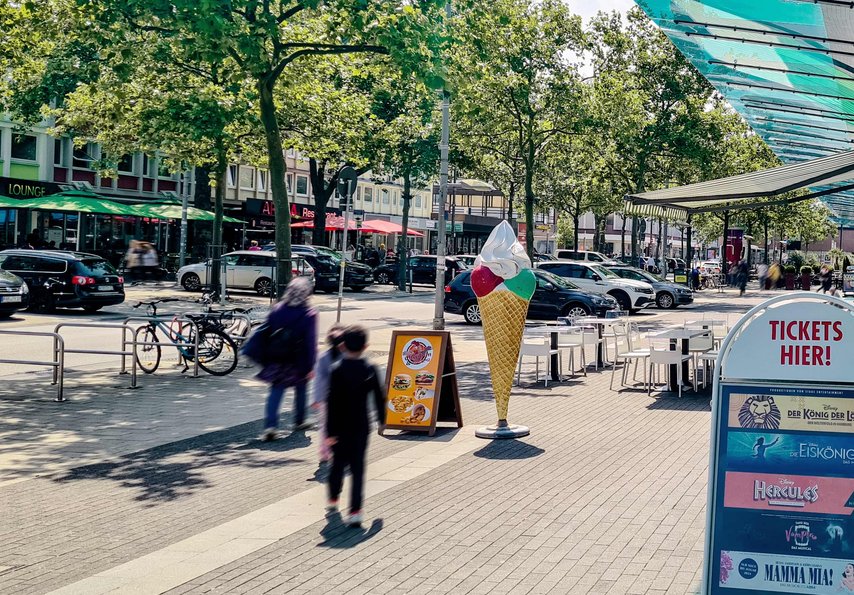
- The Nordkopf redevelopment: in future, cars will be routed through the tunnel to make way for an extended pedestrian zone at Willy-Brandt-Platz and on the street between Phaeno and the Designer Outlets.
- Strengthening public transport: Buses should be given priority over private car traffic, for example through priority at traffic lights and real-time information at bus stops.
- Improving cycling infrastructure: closing gaps in the cycle path network and ensuring safe routing at junctions.
Not all of the recommendations set out in the concept will be implemented. Some proposals, such as the complete closure of Pestalozziallee to motor vehicle traffic, were removed from further discussion in advance following political decisions.
Our conclusion
Traffic planning in a city that has grown up around the car is not a case of ‘either/or’. The aim is to design the road network in such a way that it works for all road users. The Wolfsburg city centre traffic plan is a step in this direction. It provides a technically sound foundation on which the city can build in the coming years.
picture source: https://www.wolfsburg.de/newsroom/2026/05/gut-erreichbare-innenstadt
Transport Planning Insights
More news about:
Transport Planning